By Amanda Keen and Rakeem Wright, PharmD Class of 2026, Appalachian College of Pharmacy, VA, USA
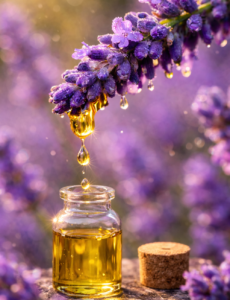
- Common Name: Lavender oil
- Scientific (Botanical) Name: Lavandula angustifolia
- Part Used: Flowers /flowering tops (steam-distilled essential oil) [Ref]
Traditionally & Scientifically Recognized Uses
- Lavender oil has been traditionally used in skincare for its soothing, anti-inflammatory, and wound-healing properties. [ref]
- Laboratory studies support lavender’s anti-inflammatory and related skin-modulating effects. [ref] [ref]
- Lavender oil has been used as a folk remedy for dermatitis and atopic conditions (scientific cell model studies). [ref]
Preclinical and/or Clinical Evidence
1. Anti-inflammatory
A cell model of atopic dermatitis showed that lavender oil and linalyl acetate inhibited keratinocyte inflammatory activation without strong skin sensitization. [ref]
2. Wound-healing
-
- In rat skin wounds, lavender oil promoted granulation tissue formation, increased type I and III collagen expression, and accelerated wound area reduction [ref]
- Topical application of lavender essential oil on episiotomy wounds resulted in significantly reduced redness at the incision site by 10 days postpartum, indicating an enhancement of wound healing. [ref] [ref]
3. Antimicrobial & Antifungal
-
- Lavender oil and linalool are fungistatic and fungicidal against C. albicans. At lower concentrations, they inhibit virulence factors (germ tube & hyphal growth), potentially reducing infection spread. [ref]
- Lavender essential oil shows promise as a natural enhancer of conventional antiseptics against antibiotic‑resistant bacteria like MRSA. [ref]
4. Atopic dermatitis (eczema)
Research shows that lavender essential oil (Lavandula angustifolia) and its key component linalyl acetate may help calm the underlying causes of atopic dermatitis, supporting healthier, less irritated skin. Gentle and low-sensitizing, this natural solution works at the cellular level to help soothe, protect, and balance your skin. [ref]
Safety Profile (find articles about: allergic reaction, skin inflammation, pregnancy
-
- The maximum safe concentration of lavender essential oil for topical use is generally 2–3% for everyday adult use, up to 10% for short-term, localized treatment, and 0.5–1% for children, the elderly, or sensitive skin, with undiluted oil never applied directly. [ref]
- Many topical lavender oil products in cosmetics use low concentrations (often <1–2%) to reduce the risk of irritation and allergic response. [ref]
- Lavender oil is generally well tolerated at low cosmetic-use concentrations; however, allergic contact dermatitis has been reported in sensitized individuals.[ref]
- Rare case reports have described reversible prepubertal breast changes following repeated topical exposure to lavender-containing products; a causal relationship has not been definitively established. [ref]
- There is limited information available regarding the safety of lavender use during pregnancy or breastfeeding. [ref] [ref]
Proposed Mechanism of Action
Anti-Inflammatory Effects
Lavender (Lavandula angustifolia) exerts anti-inflammatory effects by inhibiting pro-inflammatory cytokine production (IL-1β, IL-6, IL-8) and modulating NFκB signaling, helping to calm inflammatory responses in the skin. [ref]
Wound Healing Support
Lavender oil accelerated collagen production and fibroblast activity and upregulated TGF-β (a key growth factor in healing) in rat wound models.[ref]
Antimicrobial & Antifungal Research
Lavender essential oil demonstrated significant inhibitory activity against bacteria and some fungal strains in laboratory in vitro tests, suggesting antimicrobial potential; however, additional in vivo and clinical studies are needed to validate therapeutic use in humans. [ref]
Regulatory Notes
-
- The U.S. Food and Drug Administration (FDA) explains that products intended to be applied to the body for cleansing, beautifying, or altering appearance (e.g., lotions with lavender scent) are regulated as cosmetics.
- However, if a product makes therapeutic or disease‑related claims (e.g., “treats eczema”), it may be regulated as a drug and require FDA approval before marketing. [ref]